Choosing the Right Lumens for the Right Room
A simple guide to how much light you actually need at home.
Published:
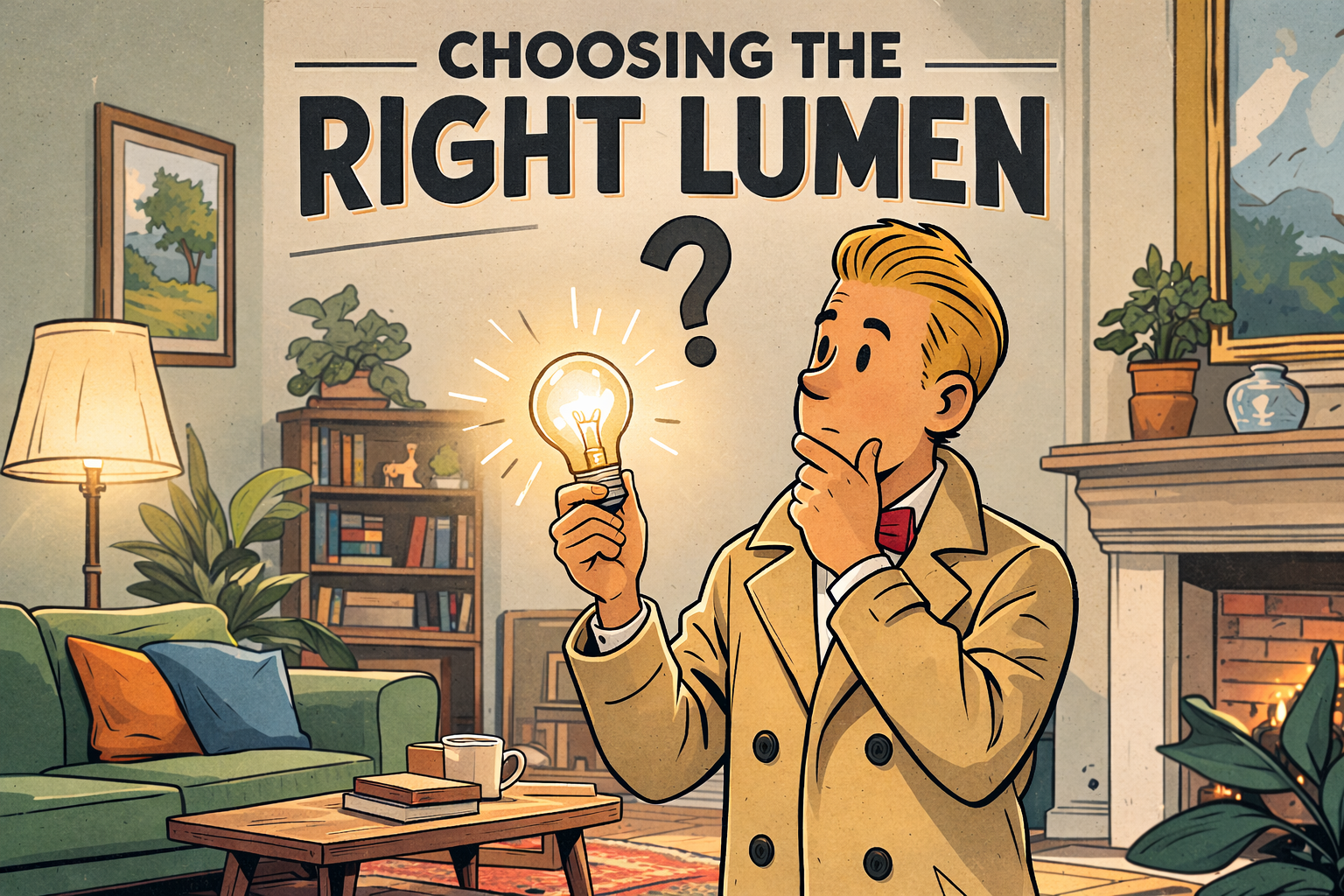
Choosing the right bulb is not just about socket type and shape. One of the most important factors is lumens, which tells you how much light a bulb produces. Many people choose bulbs that are too dim and try to compensate with extra lamps, while others pick bulbs that are too bright and end up with a room that feels harsh and uncomfortable.
What do lumens mean in real life?
Lumens describe total light output. Higher lumens mean more light. That does not automatically mean a better choice, because the right level depends on the room, ceiling height, wall colors, and what you actually do in that space.
Match the light to the space
In a bedroom or living room, softer light usually feels better and creates a calmer atmosphere. In kitchens, hallways, and work areas, you often need more lumens for visibility and comfort. Also remember that dark surfaces absorb light, while light-colored walls reflect it more effectively.
A simple way to think about it
Start with an estimated lumen level, then adjust by feel. Too bright? Go down one step. Too dim? Go up. The combination of lumens, placement, and color temperature has the biggest impact on how a room feels.