One Strong Lamp or Multiple Light Sources?
How to build a room that feels comfortable, practical, and evenly lit.
Published:
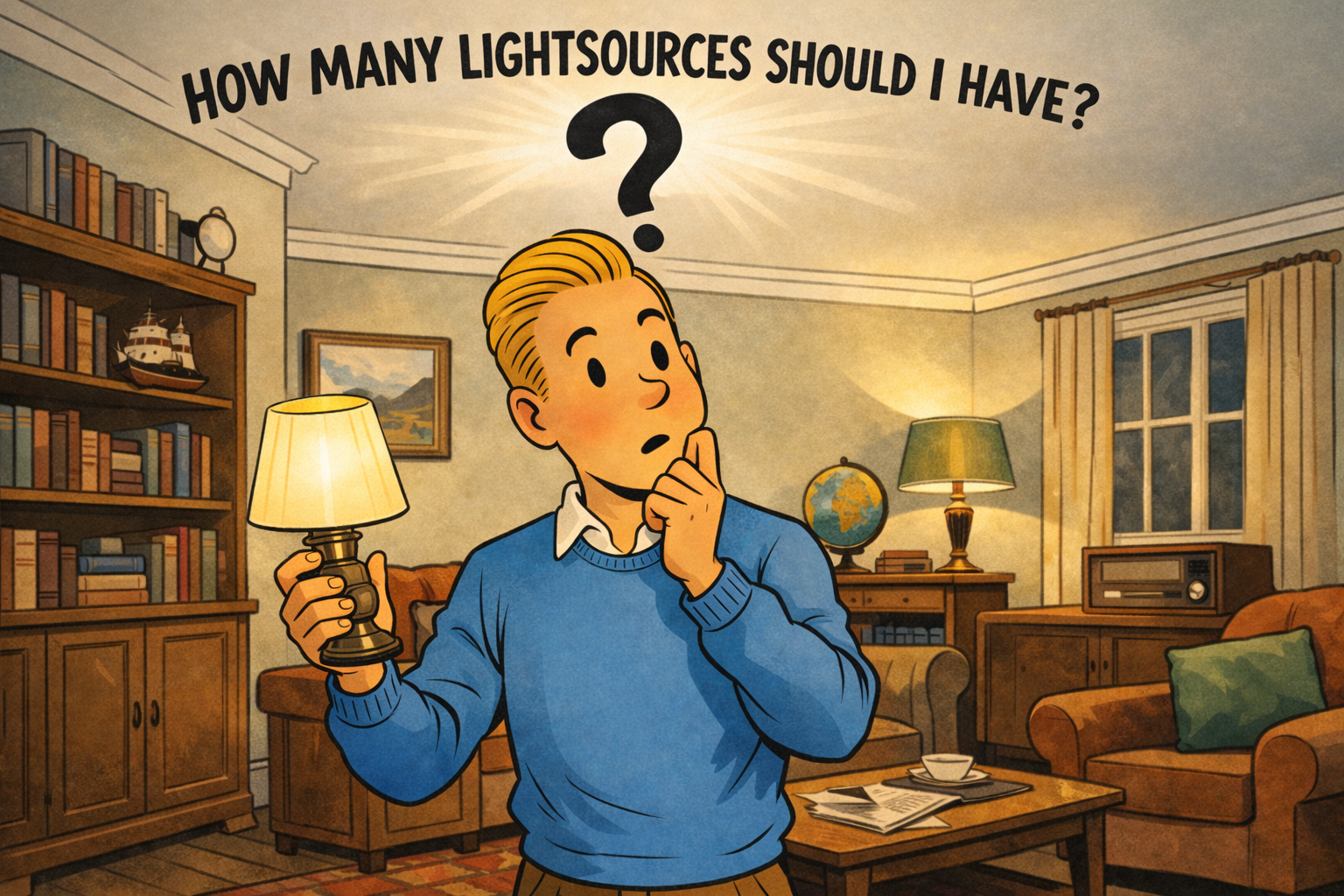
Many people try to solve a room’s lighting with one strong ceiling light. That can work in some spaces, but it often creates harsh light, dark corners, and a room that does not feel very inviting. In many homes, the lighting becomes much better when you combine multiple light sources instead of relying on a single point.
Why one light source often feels wrong
A strong ceiling lamp can light up a lot, but it also creates stronger contrast. Surfaces near the lamp become bright while other parts of the room feel darker. This can make the room feel flat, glary, or unbalanced, especially in the evening when you usually want a softer atmosphere.
Think in layers: general, task, and ambient light
A good setup is to combine different types of lighting. General lighting provides the base level for the room. Task lighting helps where you need clearer visibility, such as reading, cooking, or working. Ambient lighting adds softness and depth, for example with table lamps, wall lights, or indirect lighting.
Start simple and adjust to the room
You do not need to overdo it from the start. Begin with a good main light and add one or two supporting light sources where the room feels dark or empty. Small changes in placement, lumens, and color temperature are often enough to make the room feel much better.