Lumens vs Watts Explained: How to Choose the Right Bulb Brightness
Understand the real difference between lumens and watts so you can stop guessing and choose the right bulb for every room.
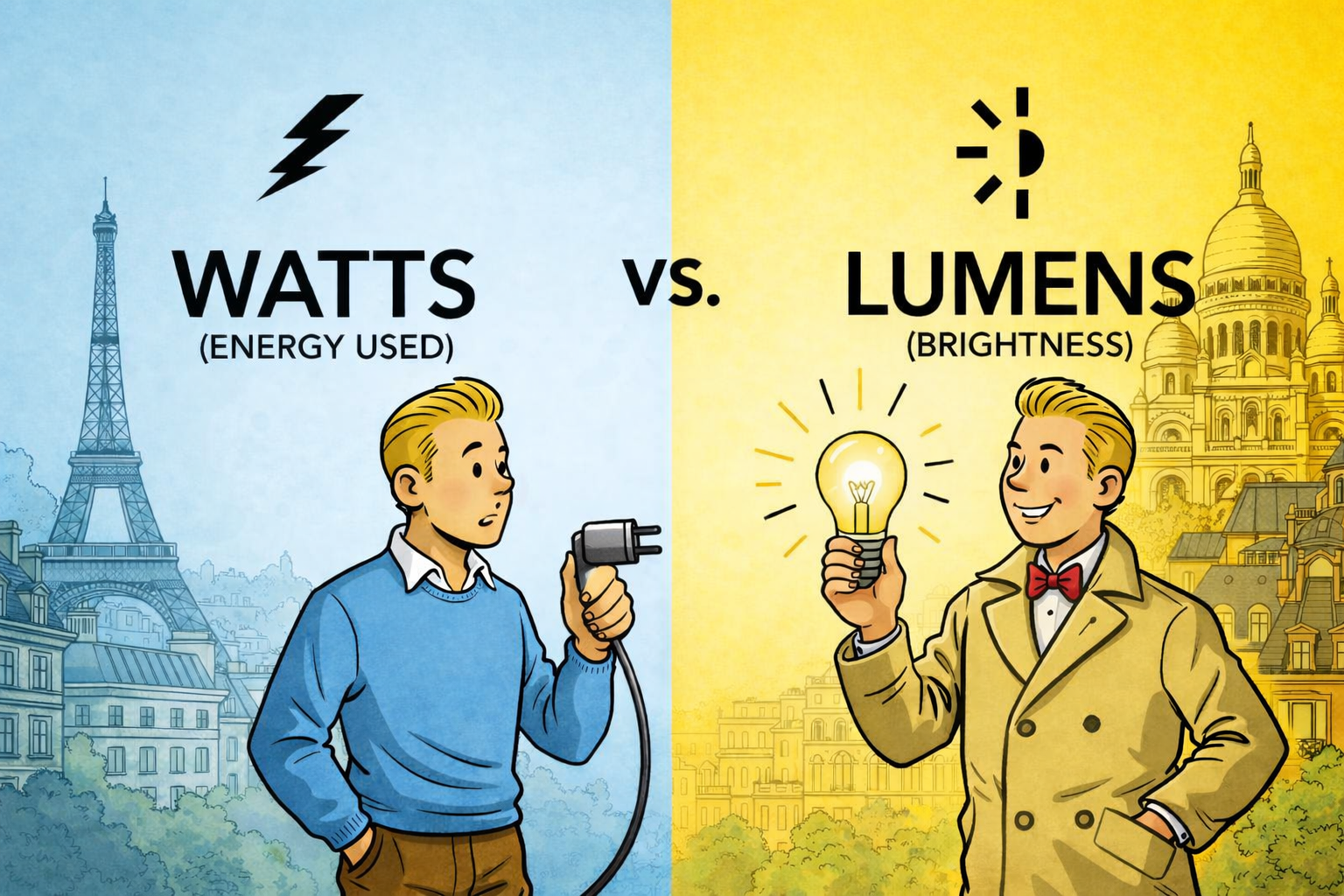
Why so many people still look at watts
One of the most common mistakes people make when buying bulbs is focusing on watts instead of lumens. That habit makes sense if you grew up with incandescent bulbs, because wattage used to be a rough shortcut for brightness. A higher watt number usually meant a brighter bulb, so most people learned to shop that way without thinking twice. But modern lighting changed that completely. Today, watts tell you how much energy a bulb uses, while lumens tell you how much light it actually gives off. If you still choose bulbs by watts alone, there is a good chance you will end up with the wrong brightness for your space.
The difference between lumens and watts
So what is the real difference? Lumens measure light output. In simple terms, lumens tell you how bright the bulb is. Watts measure energy consumption. They tell you how much electricity the bulb uses to produce that light. With modern LED technology, a bulb can use much less energy than an older incandescent bulb while still giving you a very similar amount of brightness. That is exactly why watts are no longer the best way to compare bulbs.
Why this matters so much
This matters because many shoppers still think lower wattage must mean weaker light. That is not true. A low-watt LED can easily replace a much higher-watt incandescent bulb if the lumen output is similar. This is one of the main reasons people sometimes buy the wrong replacement bulb. They look for a familiar watt number instead of checking how much light the new bulb actually provides. The result is often a room that feels too dim, too harsh, or just not right for the space.
How to choose the right brightness
Choosing by lumens makes the process much more accurate. If you want a soft glow for a bedside lamp or a warm corner in the living room, you can choose a lower lumen output. If you want strong task lighting in a kitchen, utility room, or workspace, you can choose a higher lumen level. Once brightness is decided, you can then compare bulb types and pick the one that uses the least energy for the result you want. In most homes, that efficient option is usually LED.
Brightness is not the whole story
Of course, brightness is not everything. The feel of a bulb also depends on color temperature, the fixture, the shade, and even the wall colors in the room. A warm white bulb can feel softer and more relaxed, while a cooler white often feels cleaner and more focused. But none of that changes the basic rule: lumens tell you how much light you are getting, while watts tell you how much energy it costs to produce that light.

When buying the right bulb gets easier
Once you understand that, shopping becomes much easier. Instead of relying on old habits, you can think in terms of what the room actually needs. Is this a reading lamp? A ceiling light? A decorative wall fixture? Do you want something calming, practical, or bright enough for detailed tasks? Lumens help answer those questions far better than watts ever could in the modern market.
This is also where a Bulbfinder becomes genuinely useful. Rather than guessing based on packaging alone, you can narrow things down by fitting, shape, brightness, and room type. That saves time and reduces the chance of buying a bulb that technically fits but feels completely wrong once it is switched on.
The simple rule to remember
So if you want the simplest rule to remember, it is this: choose brightness by lumens, then compare energy use by watts. That one change makes it easier to understand modern lighting, easier to buy the right bulb, and much easier to avoid the frustration of poor replacements. Once you stop treating watts as brightness, the whole process becomes far more logical.